Niles Fence & Security Products, LLC

(800) 321-7464
Niles Fence & Security | 310 N Pleasant Ave   Niles, OH 44446

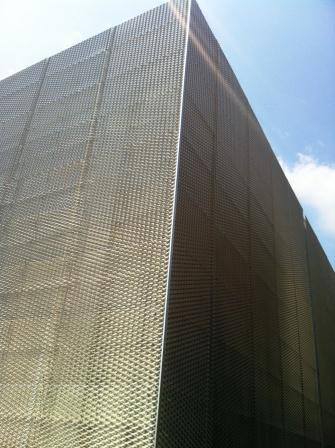
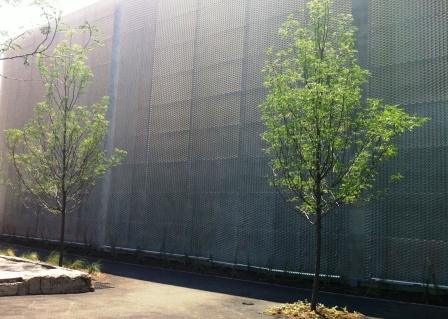
Aluminum Expanded Metal

Our expanded aluminum mesh is available in the same pattern designs and similar strand thickness as our standard carbon steel mesh.  Aluminum expanded metal is a great option for both decorative applications and guarding applications because it is both light weight, strong and flexible.


Installers and project managers specify aluminum expanded metal to help eliminate reach through or pinch points on fences and gates. By guarding and protecting automatic gate operators, you can comply with voluntary UL-325 safety standards.


Features:

Suggested Mesh Options Include:

  • ½” - .081
  • ¾” - .081
  • ¾” - .125
  • 1-1/2” - .125

 ADDITIONAL INFORMATION ON UL-325 STANDARDS


UL-325 is a voluntary industry standard that addresses safety issues and concerns with automatic gate operators in the fencing industry.   The standard has two main parts.  The first part recommends primary and secondary safety devices for all automatic gate operators.  The second recommendation specifies protections to screen or guard the operators and moving parts of slide gates from pinch points and reach through points in the fence


Specifically, expanded metal mesh can be used to help you meet the following provisions:

  • All openings of a horizontal slide gate, and the portion of the fence where the slide gate passes, must be guarded or screened.  Slide gates must have a protective cover 48 inches in height extending from the bottom of the gate/fence panel.
  • All exposed entrapment points must be eliminated or guarded.
  • Guarding must be supplied for exposed rollers which are regarded as pinch points.

All gate operators have been divided into four classes and the recommended protections are listed in the tables below:


   Usage Class

Gate Operator Category

Horizontal slide, vertical lift & vertical pivot

Swing and vertical barrier (arm)

Primary Type

Secondary Type

Primary Type

Secondary Type

Vehicular I and II

A

B1, B2 or D

A or C

A, B1, B2, C or D

Vehicular III

A, B1 or B2

A, B1, B2, D or E

A, B1, B2 or C

A, B1, B2, C, D, or E

Vehicular IV

A,B1,B2 or D

A, B1,B2, D or E

A, B1, B2, C or D

A, B1,B2, C, D, or E

Note – The same type of device shall not be utilized for both the primary and the secondary entrapment protection means.  Use of a single device to cover both the opening and closing directions is in accordance with the requirement; however, a single device is not required to cover both directions.  A combination of one Type B1 for one direction and one Type B2 for the other direction is the equivalent of one device for the purpose of complying with the requirements of either the primary or secondary entrapment protection means.

Entrapment protection types:

Type A - Inherent entrapment protection system

Type B1 - Provision for connection of, or supplied with, a non-contact sensor (photoelectric sensor or equiv.)

Type B2 - Provision for connection of, or supplied with, a contact sensor (edge device or equivalent)

Type C - Inherent adjustable clutch or pressure relief device

Type D – Provision for connection of, or supplied with, an actuating device requiring continuous pressure to maintain opening or closing motion of the gate

Type E – An audio alarm

 Class I – Residential usage, covering one to four single family dwellings

Class II: Commercial usage where general public access is expected; a common application would be a public parking lot entrance or gated community.

Class III: Industrial usage where limited access is expected; one example is a warehouse property entrance not intended to serve the general public.

Class IV: Restricted access; this includes applications such as a prison entrance that is monitored either in person or via closed circuitry.